TWO CHANNELS. ONE LUMINOUS LITTLE WORLD.
Let the lights find their way.
Cross paths. Change channels.
Bring both ribbons home.
CIRCUIT 01 / 8
TWO LIGHTS, BEAUTIFULLY SEPARATED
Both ribbons are home.
Eight quiet circuits
No clock. Room to think.
How the two channels work
Choose A or B, then move one square. Each ribbon has a head and tail. It follows itself and cannot turn directly backward.
Matching walls block; opposite channels pass. ☀ Sun walls stop a Sun ribbon, and ☾ Moon walls stop a Moon ribbon. Opposite-channel ribbons can share squares. Same-channel ribbons cannot.
Flip pads change the whole ribbon. Enter a glowing ⇄ pad to switch Sun and Moon. If the two ribbons overlap anywhere, both flip together. A move is blocked if the changed channel would trap a body in a matching wall.
Gather sparks, then dock both heads. A spark is collected by a head in its matching channel. Each receiver names A or B and shows its required channel. Both heads must be home at the same time.
Tap a ribbon to select it, or swipe the board to move. Keys: arrows / WASD to move, 1/2 to select, Space to swap, Z undo, Y redo, R restart, H nudge.
Why light? Source & artwork
This original fictional puzzle is inspired by November 2026 research on separating mixed light into distinct optical modes. The grid rules are for play rather than a model of the device.
Mechanical inspiration: Snakeshift by Isaiah Odhner (MIT, 8 observed stars). Its browser code was last maintained in July 2025; the newer February 2026 push concerns a terminal version. No upstream code, puzzles, graphics or audio are reused. Chromelle’s implementation, eight circuits and solver are original. Original MIT license · Research notes.
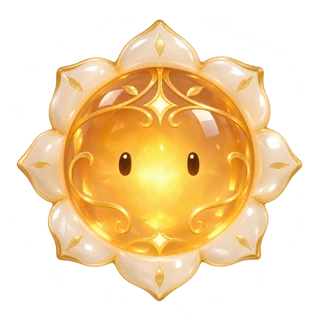
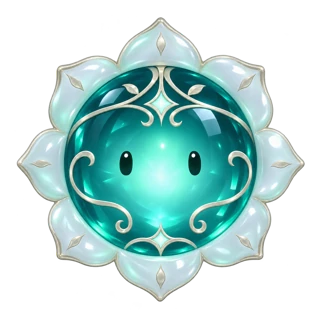
Sun and Moon lantern artwork generated with OpenAI’s GPT image model and optimized as local transparent WebP sprites. Hints search the real game rules in a local browser worker; a search limit is reported honestly. Everything runs on this device.